
Old Bones, New Life
Designer Meghan Jay refreshes an 1890 Chicago Victorian and creates a home for her young family.
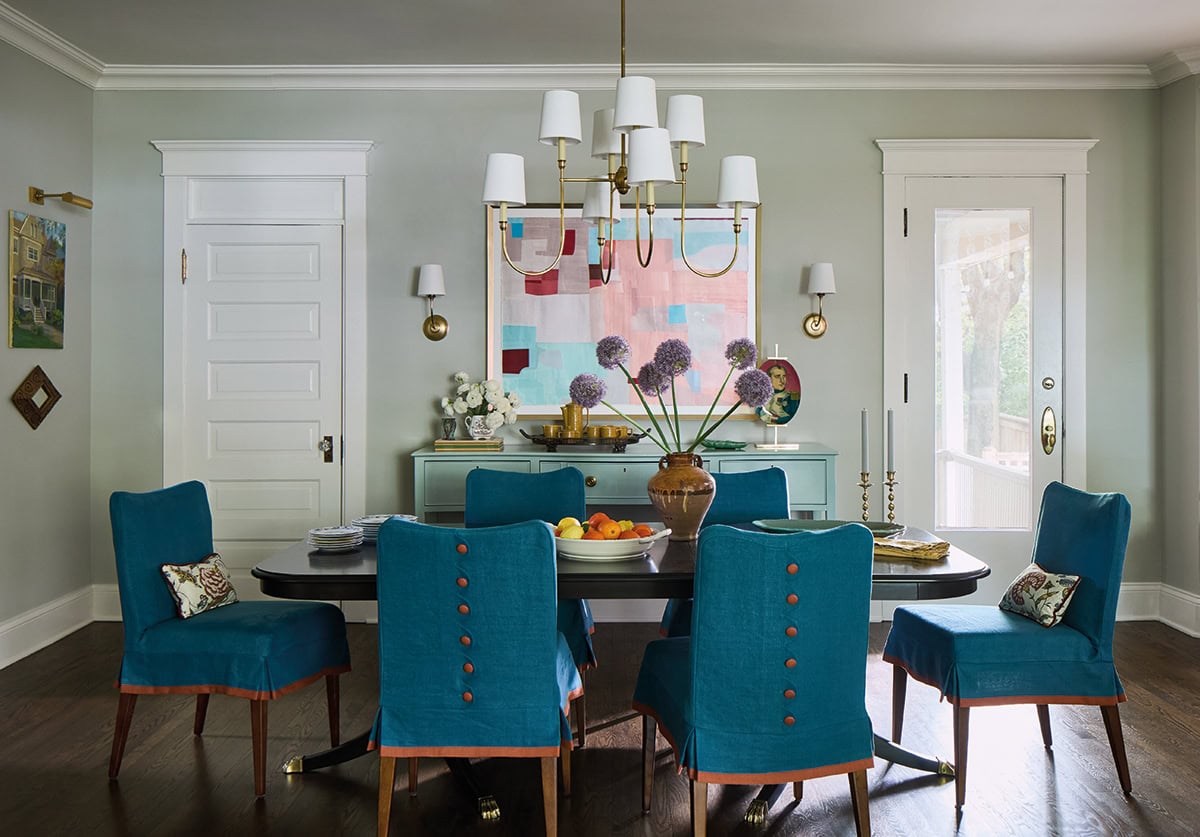
The symmetry of the Visual Comfort light fixtures, through CAI Designs, balances the dining room, a deliberate counterpoint to the eclectic mix of vintage and custom pieces underneath. Schumacher fabric and Samuel & Sons trim were fashioned into flirty slipcovers.
The house on Hinman Avenue, in Evanston, Illinois, has served several purposes since architect Stephen A. Jennings designed it in 1890 for Francis and Adaline Butterworth Gellatly: it’s been a retirement retreat for the Scottish-born attorney and amateur playwright; a home to generations of Chicago families; and, most recently, a canvas for interior designer Meghan Jay.
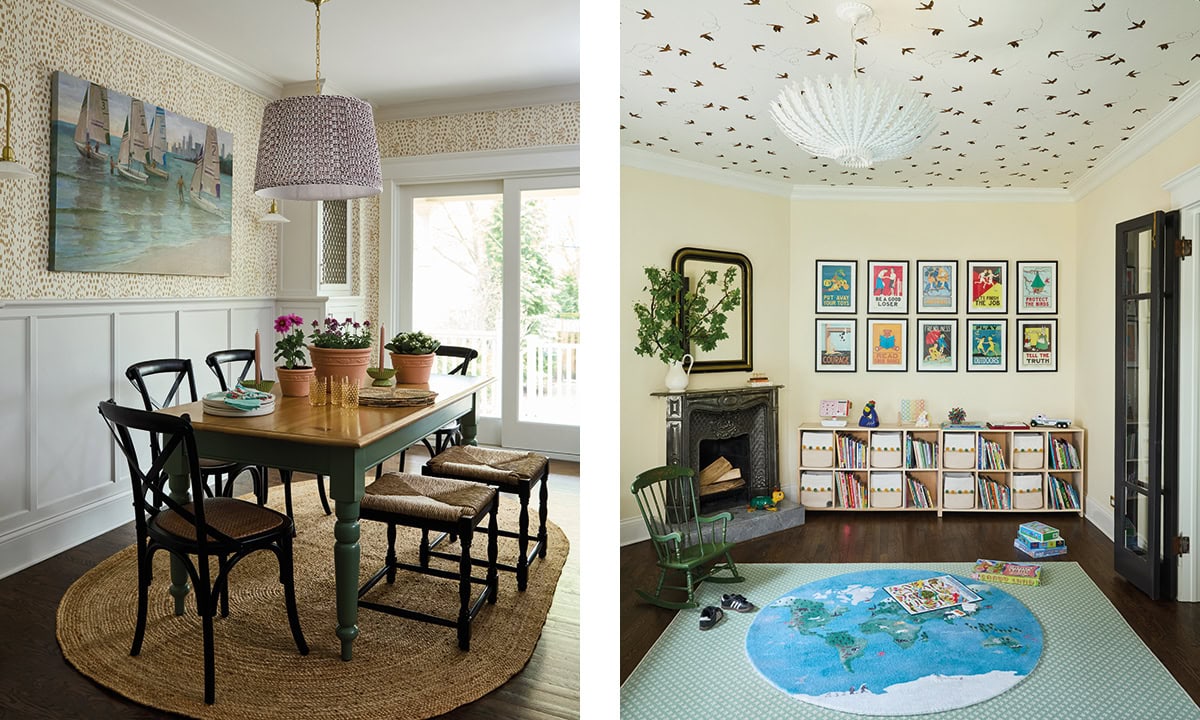
Left: In the breakfast room, Jay replaced the existing fixtures with a charming pendant light adorned with a pleated fabric shade. The mix of chairs and stools establishes a casual vibe, while the racetrack braided rug underfoot references the early 20th century, when the house was built.
Right: Just off the entry hall, the playroom reveals its whimsical flair only once you’re inside. It features a swirling-bird wallpapered ceiling, a vintage Stark carpet from an estate sale, and French doors that close the space off to reduce noise when needed.
Jay is originally from Madison, Connecticut; her husband hails from Vancouver. They settled in the Chicago area as a compromise—roughly equidistant from their respective families—that and the Midwest seemed the perfect place to raise their two young children, Colin and Charlotte. They were looking for an older home with character, so finding a Victorian here was a stroke of luck; they rarely come on the market. Their realtor happened to be the listing agent, and Jay got an early look before the house went public.
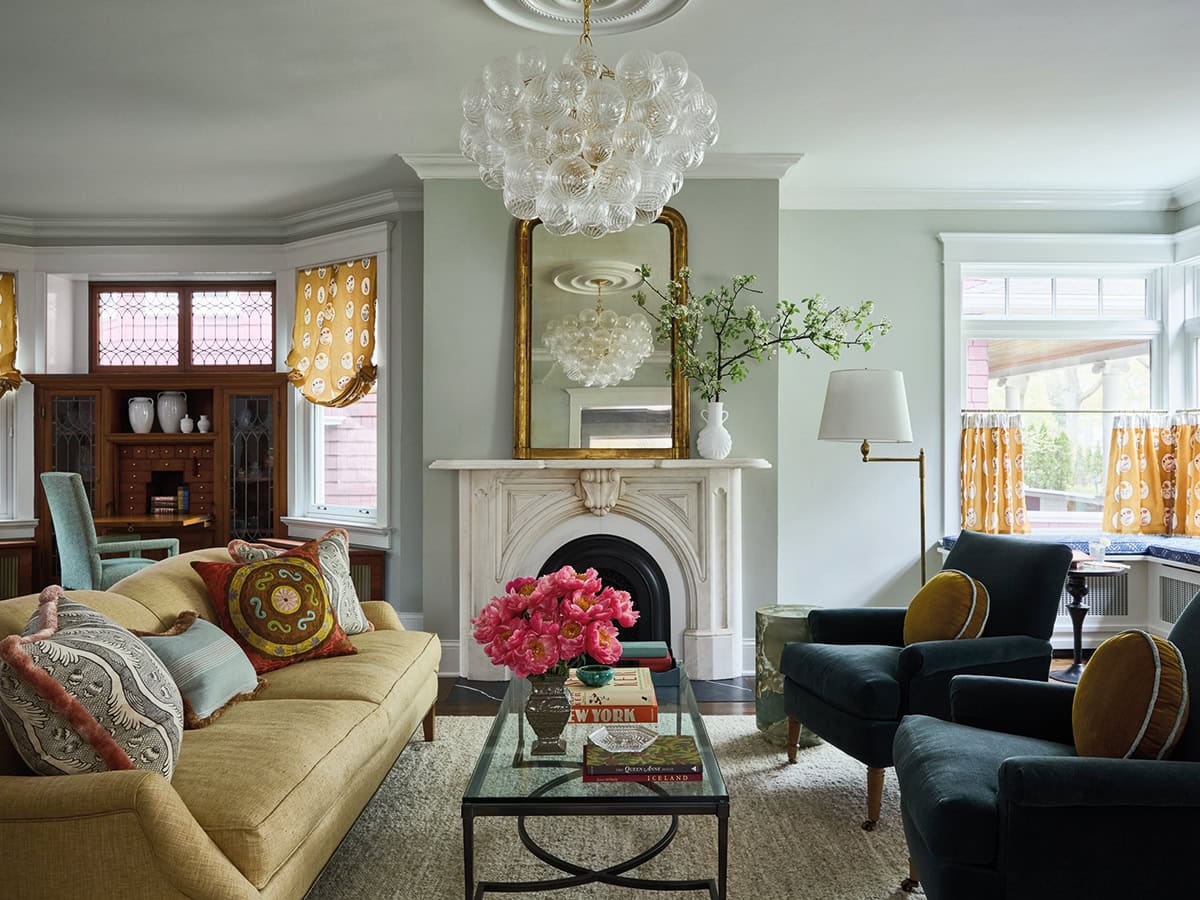
In the family room, original built-ins flank the bay window (left), now warmed by new radiators with custom covers. Hanging above, a CAI Designs chandelier illuminates the marble mantel and plush seating. The cheerful yellow window treatment fabric features a circular cameo motif that is repeated in the room’s toss pillows.
At roughly 6,000 square feet with six bedrooms and a coach house out back, the place had excellent bones. What Jay needed to fix was how the house felt. Ceilings and walls had been painted, what Jay calls a “dismal brown.” Recessed spotlights threw haphazard pools of light onto the walls, and the entry hall presented what she dubbed “the hallway of doors”: four openings, each a different size. Her first moves were to demo three of those openings, rebuild them at equal widths, install proper overhead lighting, and paint the ceilings white. The house immediately opened up while still maintaining the room-by-room intentionality she loves about older homes.
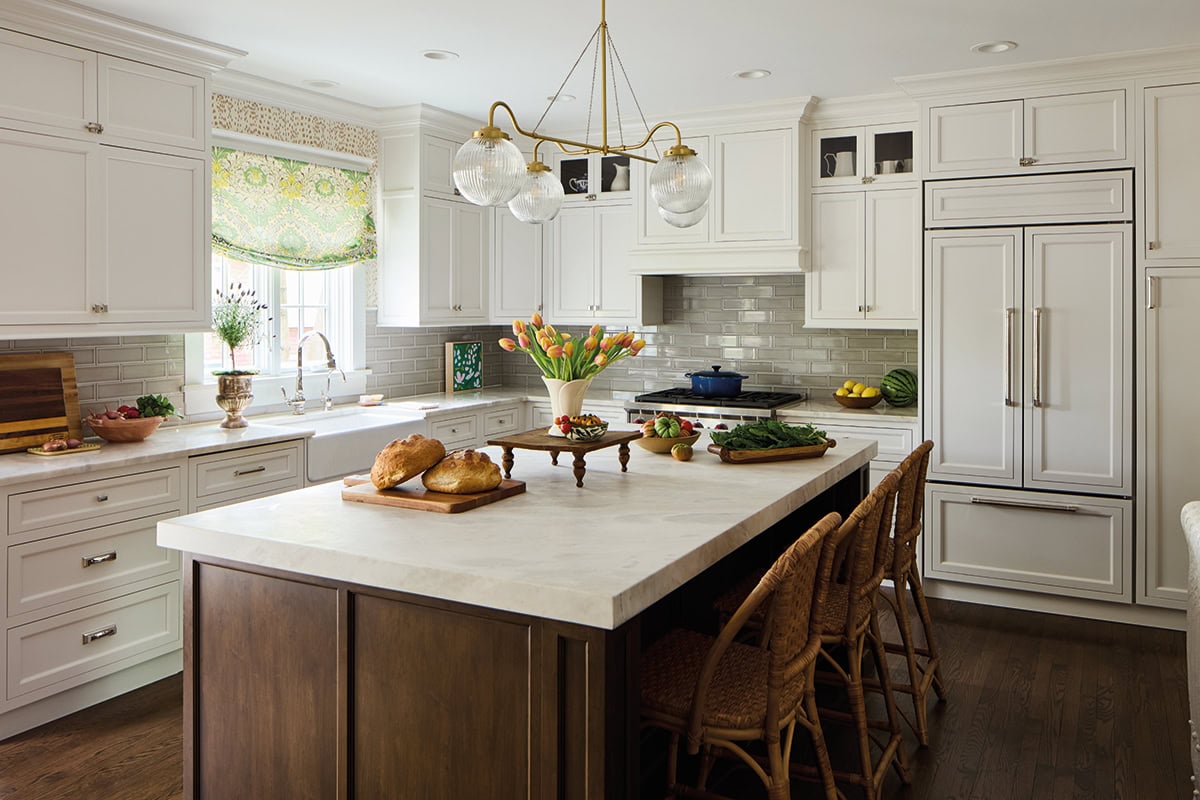
Wallpaper with a vertical pattern from Brunschwig et Fils lifts the kitchen’s ceilings. At the same time, Armac Martin hardware, through Katonah Architectural Hardware, a Morris & Co. roman shade, through Sanderson, and Wolf and Sub-Zero appliances complete the kitchen.
Jay studied art history in college and took a course called Materials and Methods that she still thinks about. Students learned how pigments were produced in different eras, then ground their own by hand to make egg tempera. That experience gave her a lasting appreciation for honoring historical materials while using them in fresh ways. Her palette nods to the greens, yellows, and reds typical of Victorian interiors, but rendered brighter and lighter. William Morris fabrics appear throughout, entirely appropriate to the period. And she is unabashedly pro- wallpaper—even in the kitchen, where a vertical pattern makes the lower ceilings feel taller.
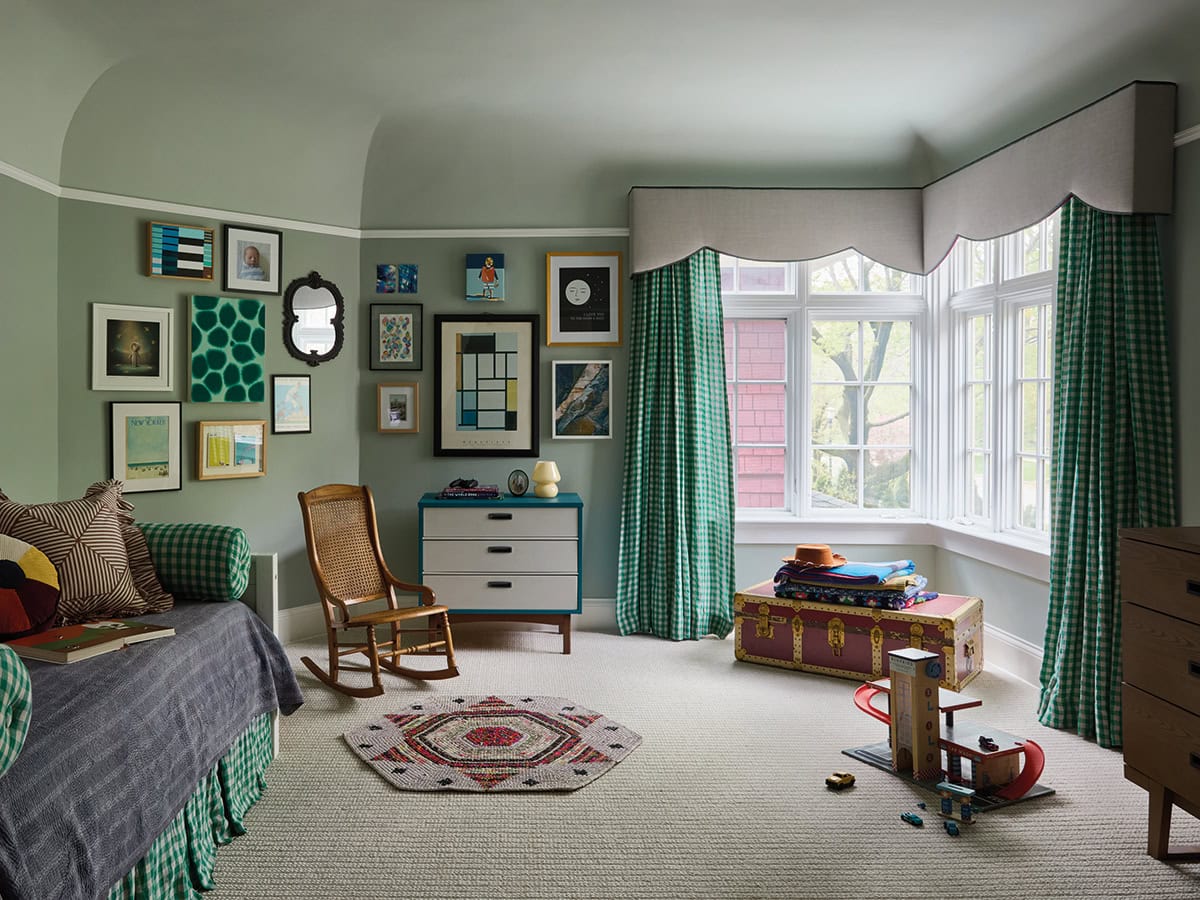
Jay collects art for each of her children so they’ll have pieces for their first homes. In Colin’s room, a Piet Mondrian hangs above the turquoise-framed dresser, setting the color scheme for everything that follows. The coved ceiling is original to the house.
As a designer, she is equally pro-estate sale; the mix of humble and precious pieces lends an air of being collected over time—the secret sauce of great decorating. A mahogany dining table came off Facebook Marketplace and was refinished. A marble mantel salvaged from an 1890 Chicago greystone replaced an unfortunate midcentury brick piece. Commissioned artwork hangs alongside vintage mirrors, and custom slipcovers dress old chairs. With the details attended to—plush toss pillows, stenciled floors, and contemporary lighting—the result is a home that honors its history without being held captive by it.
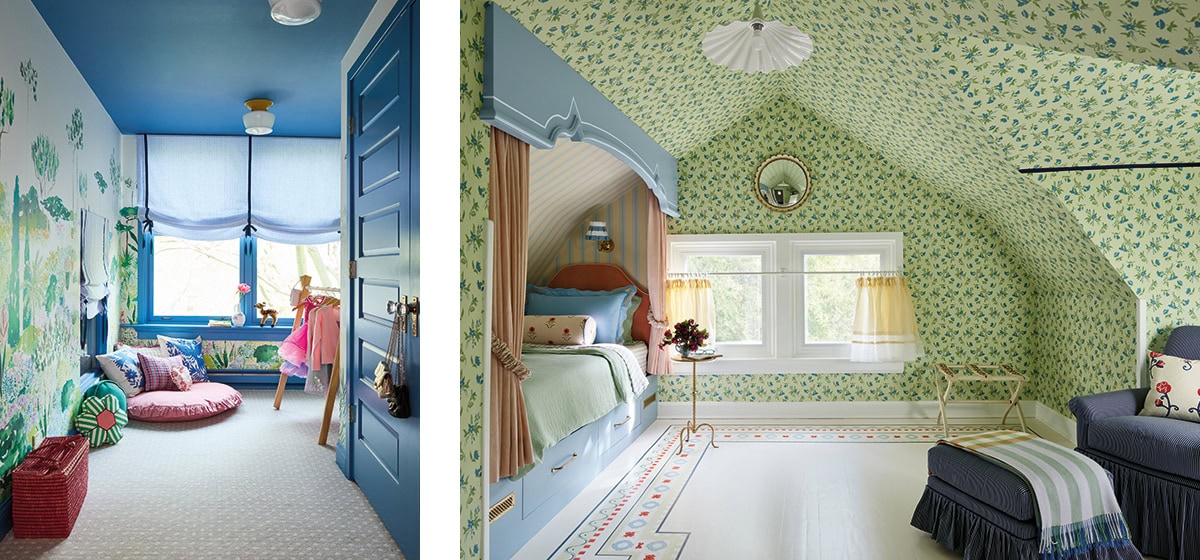
Left: Once a sleeping porch where Victorians languished in the Lake Michigan breeze, this periwinkle-hued space is now Charlotte’s dress-up room, wrapped in a panoramic wallpaper by Isidore Leroy called Jardin de France. Crisp Roman shades diffuse the afternoon light.
Right: Inspired by Lucy Maud Montgomery’s Anne of Green Gables, Jay turned this attic into a proper guest room with a built-in bed cleverly tucked into the alcove and a hand-painted floor border inspired by vintage rugs. A single floral wallpaper wraps walls and ceiling, embracing the tricky rooflines rather than fighting them.
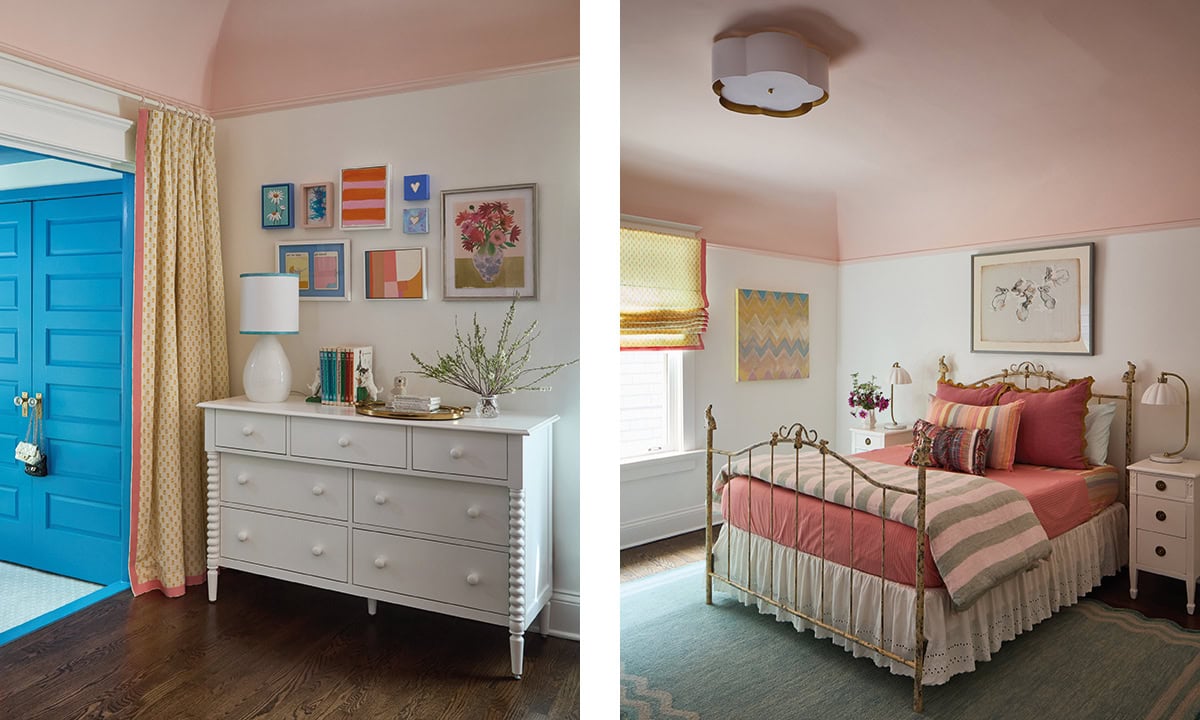
Left: In Charlotte’s bedroom, thermal-lined portière curtains seal off the uninsulated sleeping porch beyond.
Right: Sheathed in the palest pink, the ceiling enhances the room’s original cove detail and picture rail. The Missoni-esque chevron painting beside her bed is Jay’s own work, based on the wallpaper from her childhood nursery.